Akhanda Bharatam

Click here to know about Akhanda Bharatam (अखंड भारतम्)

Sanatana Dharmam

Click here to know about Sanatana Dharmam (सनातन दर्मम्) and Hinduism

Friday, 9 August 2013

Origination of the Rasas

In this article it is explained how the rasas originate from the pancha mahabhootas. The water falling from the sky has qualities of moon. They are soft, cool and without any taste.When this water mixes with the elements located on the earth. Viz, plants, animals etc they attain different rasas. So the rasas or the tastes originate in the body. 

Salt: from land and fire
Air and Fire: Bitter
Air and sky: spicy
air and land: Acidic

Qualities of different type of Rasas and their karma (action)

The rasas which have more air and sky, move upwards. The rasas that have more of land and water move downside. If there is a combination of fire/air/land then they move in both sides.

Sweet rasa:
Because sweet rasa is beneficial for human body. It helps in increasing blood, bone marrow, bone, and semen. It increases age.

It pacifies all the five indriyas, mind and knowledge senses. It improves the color of the skin. IT pacifies pitta, poison and air. It pacifies thirst. It is beneficial for skin, hair and throat.

It makes the body . It pacifies inflammation. It is liked by ants and insects. It is cold and heavy.

Irrespective of these qualities of sweet rasa. Too much consumption of this Rasa can be harmful. It can bring fat in the body.

Make you feel Lethargy, too much sleepy and heavyness in the body. It can cause disinterest. It can have a negative impact the digestive power.

A person who eats too much sweet may suffer from diseases related to elephant foot, eye problems, asthma. All these disease occur due to increased Kapha.

In other words if you eat a lot of sweet kapha in the body increase. Too much of it can create problems.

However, it is good in limited quantities. Too much of it can cause side effects.

Khatta Aml rasa:

Helps in improving the appetite, strengthening the body. It wakes up your mind, in other words it makes it active.

It also strengthens the indriyas or the senses. it increases the energy and power. It decreases vayu or the air. It brings saliva in the mouth and pacifies heart.

It helps in digestion process. It gives satisfaction to the eater. It is light warm.
TOO much use side effect:
- pain the teeth
- increase thirst.
- reduces kapha in the body
- increases pitta
- Pollutes the blood
- causes inflammation
- cause fatigue

People who are weak get inflammation. It can cause septic infection in the wounds. It can cause irritability in the throat, chest and heart. So, one should eat sour food very limited quantities.

In ayurveda it is specified most of the sour foods are harmful if taken more than limited quantities.

Salt rasa

Salt taste has following qualities..

- helps in digestion
- increase appetite
- imbalances of the kapha
- helps in treatment of joint ache, constipation
- Balancing three doshas

It is enemy of all the other 5 rasas. I other words if you put too much salt in any food it will dominate.

It increase saliva in the mouth and aid digestion. It helps in increasing hunger and develop interest in eating.

It is neither too heavy nor too light. It is slightly warm. TOo much consumption of salt creates a number of problems. It increases blood pressure it can also increase the pitta.

It can cause heart problems. It makes one feel thirsty if taken in high quantities.

It can cut the flesh. It can melt the epilepsy wounds. It increases the effect of poison. It is harmful for teeth and makes them fall. It can cause impotency. It decreases the strength of senses. It creates wrinkles on the skin and make the hair white.

It can cause baldness and ithching on the skin.


Spicy rasa:
It helps in purifying the mouth. It helps in increasing the appetitite and digestive fire.It dries up the food in the stomach.
Brings water from nose and eyes. It instigate the senses. It cures bloating, sweating and undigested food in the gut. It increases the appetite. Pacifies itching. cures Fissures and infection.It helps in thinning the blood. Reduces kapha.It is light warm and dry.
Too much consumption of this rasa can cause problems like impotency.

It can cause
- too much passion
- fatigue
- underweight
- bend a person's back
- cause Asthma.
- irritation in the throat.
- increase temperature of the body.
- decreases energy
- cause thirst.
- cause pain in the leg and shoulders.

Tikt or kadwa (bitter)
Nobody likes bitter rasa or taste. BUt it helps in creating interest in eating.It pacifies effect of a poison. It pacifies itching, inflammation, it cures epilepsy and pacifies thirst.It strengthens the muscles and and skin of the body. IT can cure fever, increases digestive power. Helps in purification of blood and mother's milk.
It dries up oil bone marrow, fat, sweat, urine, feces and kapha and pitta.It is dry and light.
Too much consumption can cause:
- dried up semen.
- weak muscles
- bone and bone marrow
- it can make the skin wrinkled.
- decreases energy
- makes person thin.
- cause Vata diseases

KAshayla or Kashaya rasa
Helps in pacifying or balancing the tri-Doshas.
It helps in contracting the body part. Helps in Stop bleeding. Helps in curing the acne and cure the wounds.It is dry cool and heavy. It can soak up water/moisture in the body
Too much consumption can dry up the mouth. Can cause bloating. It dries the tongue it can contract the intestines and even block them. It can make a person impotent. It causes constipation. Causes pain in the stomach.It makes the body thin. Increases thirst and Vata Diseases.Usage of different rasas in the body in optimum and balanced quantity can improve the health. Abuse may lead to problems.A wise man must consult a good doctor and under his guidance must consume these.All rasas are identified only after putting them in contact with the tongue. 


A Review of Hindu Puranas

This review of the Puranas will exhibit some of the many topics found in each one. We offer this so that we can get an understanding of the basic content of each Purana and see the direction in awareness and understanding that can be reached by the study of particular Puranas.


The Linga Purana has about 11,000 verses in two sections. It focuses mainly on the glories and activities of Lord Shiva. This Purana includes the manifestation of the Shiva-linga and its worship, the worship and fasting days for Shiva, descriptions of the holy city of Kashi (Varanasi), Shiva’s thousand names, his marriage to Parvati, the appearance of Ganesh, and more. The later section also includes some descriptions of the glories of Lord Vishnu and some of His pastimes, as well as more about the worship of Lord Shiva.

The Skanda Purana is the largest with around 81,000 verses. It is divided into seven sections, mostly about Lord Vishnu and Shiva. It covers many different topics, some of which include the holiness of places like Kedar, Badarikashrama, Mathura, Kashi, Dwarka, and many other places and sacred rivers. It also covers worship of Shiva, the austerities of Parvati, worship of Vishnu and stories of prominent devotees, as well as activities and worship of Lord Rama,

The Agni Purana has about 15,000 verses. Herein Agni, the fire-god, explains to the sage Vashishtha many spiritual instructions. These include descriptions of the Lord’s incarnations, the universal creation, the greatness of the Ganges River, the science of astrology, religious disciplines, yoga practice, Ayurveda, knowledge of Brahman, and the art of bhakti, or devotional service.

The Matsya Purana has about 14,000 verses, which begins with the conversation between Lord Matsya and Manu. Again, it includes many topics, among which you can find descriptions of the universal creation, the family and descendants of King Iksvaku, Surya and Chandra, along with the ten avataras of God. It also relates the principles of worship and fasting on holy days, the pastimes of Parvati and Shiva, their marriage, and other stories.

The Kurma Purana has around 17,000 verses about the occurrences of the day of Brahma called Lakshmi-kalpa. Herein, the Lord’s incarnation as Kurma presents His teachings to the great sages. These include the manifestation and maintenance of the universe, the pastimes of Lord Krishna, the greatness of Kashi and other holy places, the effects of devotion (bhakti) to God that everyone should strive to attain, and the duties or dharma for liberation.

The Vayu Purana, or sometimes the Shiva Purana, has about 24,000 verses. In this book Vayu, the wind god, describes events of the present kalpa, or day of Brahma. It contains the usual information that a Purana explains, such as the process of creation, the incarnations of God, the manvantaras, the glories of the Narmada River, and detailed accounts of Lord Shiva.

The Brahma Purana has around 10,000 verses. This includes the stories of Lord Ramachandra, many stories of Lord Krishna, along with those of Surya the sun god, and the birth of Parvati and her marriage to Shiva, and other aspects of the Vedic sciences.

The Brahmananda Purana has around 12,000 verses in four parts. This provides descriptions of future kalpas (days of Brahma). Included are descriptions of the holy place of Naimisharanya, Bharatvarsha (the area of India) and other places in the world. It also describes other planetary systems, Svayambhuva Manu and other manvantaras, the activities of Lord Krishna, and the dynasties of King Iksvaku, Yadu and Vrishni, along with the dynasties and characteristics of people in the age of Kali-yuga. There are also descriptions of the creation and annihilation of the universe.

The Brahma-vaivarta Purana has about 18,000 verses in four sections. This Purana is known for the information it provides about Lord Vishnu and Shiva, and shows their unity. It also includes the basic topics of most Puranas, such as the account of the universal creation. It also provides 129 chapters of many stories of the pastimes of Radha and Krishna and how to worship Him. It also discusses Goloka, the divinity of Krishna and appearance of Radha, and numerous descriptions of Her, the birth and marriage of Tulasi, the story of Vrinda, and more. There are also accounts of Narada going to Shiva’s abode and receiving instructions, along with activities of Ganesh, Kartikeya, Parashurama, and others.

The Markandeya Purana has about 9,000 verses. Here we find the conversation between the sages Markandeya and Jaimini. A wide range of topics are discussed, a few of which include Lord Balarama’s pilgrimage when He refused to take part in the war of Kurukshetra, stories of Draupadi’s five sons, Dattatreya, the lineage of Vaivasvata Manu, stories of Lord Rama, Krishna, His incarnations, and various spiritual instructions.

The Bhavishya Purana has about 14,000 verses in five sections, or parvas. This deals with the characteristics of Brahma, dharma, worship of Vishnu and Shiva for worldly prosperity as well as liberation, and information about Surya. There are also instructions for religious discipline, charity, etc. The fifth section is what this Purana is most known for, which contains the descriptions of the kings and characteristics of the future of this age of Kali-yuga. However, there are now parts of this Purana, namely of the fifth section, that are completely lost. Furthermore, some scholars feel that certain portions of it, such as the Uttara Parva, were later additions that were separate from the original. So, though many people look to the Bhavishya Purana for its predictions of the future, it is not considered fully dependable because of the additions and deletions. However, numerous predictions of the future are also found in other Puranas, many of which can help substantiate those in the Bhavishya by comparisons.

The Vamana Purana has about 10,000 verses and describes the occurrences that take place in the day of Brahma called the Kurma-kalpa. It relates the fighting between the demons and demigods, Daksha’s unfortunate sacrificial ritual, the activities of Goddess Durga and Parvati, the greatness of Vishnu, and the conversation between Prahlada and King Bali, as well as the activities of Lord Krishna and His devotees.

The Varaha Purana has about 24,000 verses. Herein there is a conversation between Lord Varaha and Bhumidevi (the Earth Goddess) about the manifestation of Gauri (Parvati) and her sons Ganesh and Kartikeya. Gauri’s battle with the demon Mahishasura, and the greatness of holy sites like Mathura and other places are also described. It also has more about general Vedic philosophy.

The Narada Purana has around 25,000 verses. This Purana includes the teachings of the four Kumaras who offer their advice regarding such things as duties in family life and religious practice. There are also descriptions of the appearance and activities of Shukadeva Gosvami who learned the knowledge of the Bhagavatam and recited it for King Pariksit, along with the pastimes and characteristics of Lord Vishnu, Surya, Ganesh, Shiva, Durga, and others. It also offers descriptions of the other Puranas, as well as the greatness of such holy places as Haridwar, Kashi, Kuruksetra, Mathura, Vrindavana, and other places.

The Garuda Purana has around 19,000 verses in which Lord Vishnu answers questions of his carrier, Garuda, on Vedic topics and activities of the day of Brahma called the Tarkshya-kalpa. This Purana primarily relates the glories of Lord Vishnu. It contains the thousand names of Vishnu (the Vishnu Sahasranama), ways of meditating on Lord Vishnu and worship of Lord Krishna. It also includes the pastimes of Lord Rama, the process of yoga, types of charity, Sankhya philosophy, descriptions of the spiritual domain, the celestial regions, and the process for attaining liberation from material existence.

The Padma Purana is a large book of 55,000 verses in five sections. It includes the important stories of Lord Krishna and Vrindavana, Lord Rama, and other stories on the importance of various holy places, such as Pushkar, Jagannatha Puri, Kashi (Varanasi), Prayag (Allahabad), Gaya, and the Narmada and Ganga rivers. It also includes a section called the Bhagavata Mahatmya on the glories and greatness of the Bhagavata Purana.

The Devi Bhagavat is another prominent Purana not mentioned in the main groups that is said to be written by Srila Vyasadeva. It has 18,000 verses in 12 cantos. It offers descriptions of the other 18 Puranas and the 18 Upa Puranas. It also describes the 28 Vyasadevas who appeared at the end of each of the 28 Dvapara-yugas during the present time period known as the manvantara of Svayambhuva Manu. It also contains the typical information found in most Puranas, but the 10th canto specializes in information about the goddesses Maha Kali, Maha Lakshmi and Maha Sarasvati. The 9th canto explains that Vishnu and Shiva ultimately appeared from Lord Krishna, and both Lakshmi and Sarasvati manifested from the Supreme Goddess Srimati Radharani, while Durga appeared in front of both Radha and Krishna. This shows that Radha and Krishna are the source of all other forms of the Divine.

The Devi Bhagavat Purana says, as do other Puranas, that Vyasadeva appears at the end of every Dvapara-yuga to compile and write the four Vedas, and to reorganize the Puranas for the good of the people of Kali-yuga. This means that this information is eternal and is the same as that produced in its written form in the earliest Kali-yuga many thousands of years ago.

Out of all the Puranas, many scholars seem to agree that the Vishnu Purana seems to conform most closely to what a Purana is expected to be. It has around 23,000 verses. It contains the five essential subjects that a Purana is supposed to relate and also describes many other topics that are dealt with in detail. The central theme is praise of Vishnu, so it describes many aspects of Him and prominent stories of the Lord’s famous devotees, such as Prahlada, Dhruva, Prithu, and others. It also contains many stories of Lord Krishna in Vrindavana and Mathura, and His incarnations, along with the evils and predictions of the age of Kali-yuga, and many other facets of Vedic knowledge. This Purana is quite similar to the contents of the Bhagavata Purana, otherwise called Srimad-Bhagavatam, which is also centered around the theme of praise of Lord Krishna, the source of all other incarnations of God, and relates many stories of Lord Krishna’s pastimes.

Fermented Drinks in Ancient India

Fermentation technology, as mentioned in the literary texts, is more than 3000 year old in India . The fermentation technology employed a variety of processes and was put to a large number of uses. It also laid the foundation of alchemy and chemistry.


A sweet substance known as Soma juice prepared by the Vedic people is supposed to be the first product of fermentation in India . The Rigveda shows that fermentation technology took its first step in connection with the preparation of Soma juice in India . There is also another drink, known as Sura (wine/beer), prepared by fermentation. These two preparations have also been used in different medicinal preparations, surgical procedures and in many chemical and alchemical operations. It is believed that acetic fermentation was known to India since the early times.

Curd is another very popular fermentation product described in the Rigveda . It still remains a popular food. The technology of curdling milk is also found in a number of texts associated with Yajurveda . In the beginning, fermentation was mainly associated with the preparation of spiritual drinks, but later on it was used for other purposes also. The different terms associated with fermentation in various texts are as follows:

asuta (begetting a new form)
abhisuta (extraction, may indicate extraction from fermented smash)
parisrut ('foaming', 'fermenting', that is, the state of fermenting)
sandhana (complete absorption of ferment with fermenting material)

All these terms, chiefly signifying “brewing”, were part of the process of fermentation. Except the last term, all the other terms are found in Vedic literature. Fermentation technology is mainly based on four ingredients/processes. These are:

1. Base material (yoni)
2. Ferment or yeast (kinva, nagnahu), alternatively, auxiliary (sambhara), providing flavor and good taste to liquor in addition to fermenting
3. Heating or digesting
4. Fermenting vessels.


The two drinks that are quoted in Vedic texts are Soma and Sura . The Rigveda describes soma as a godly concoction, while sura is described as mainly a human drink. However, the Yajurveda deifies sura and uplifts it to the status of soma .

Evidence of fermentation in the Rigveda

Soma is an invigorating plant product generally prepared by squeezing juice from plants. The following statements give an indication of fermentation:

Admixture of a thick juice of Soma with barley powder ( RigVeda . IX. 68.4). This statement is a clear indication of fermentation with barley.
“Fifteenth day old highly intoxicating Soma” ( RigVeda . X.27.2). In this statement fifteenth day probably refers to the broth fermented in the vat for 15 days.
“Soma being treated is red” ( RigVeda .IX.82: 1).

All these statements give an indication of fermentation technology involved in the preparation of Soma.

Evidence of fermentation in the Yajurveda

The Sukla Yajurveda ( Vaj. XIX. 13-15; 82-83) describes the formation of two stimulating drinks – Sura and Parisrut . Sura was supposed to be prepared from germinated paddy, germinated barley, and parched rice with the help of ferment. Yeast was used most often as the fermenting agent.

The Katyayana Srauta sutra (XV, 9.28-30; XIX, 1-2) also gives a complete description of the preparation of Sura . According to this method either boiled rice or boiled barley was mixed with the ferment and also with masara and the entire mixture was kept in a jar. The jar was then kept in a pit for three nights. Meanwhile, cow's milk and powdered parched rice were poured in the pit.


Technologies connected with the preparation of vinegar ( amla )

According to Kautilya, there were two types of amla preparations. One method involved the use of fruit juice and phalamla , while the other was derived from molasses. Its preparation was done for a longer time so that the product became sour. Kautilya further states that these were home-made products.

Medaka (spiced rice beer), Prasanna (spiced barley or wheat beer), Asava (sugarcane beer), Arista (medical tincture), etc, were some of the most popular drinks of that period. Different varieties of fermented liquor provide us the knowledge of different fermentation processes developed during that period.

. Period of Scientific and Technical Literature (100 CE onwards)

Fermentation technology advanced in the field of medical science and chemical and alchemical practices. A large number of digesting methods now came into existence. Some of these digesting methods were:

The fermenting vessel was deposited into the earth and sometimes the vessel was covered with horse dung.
The fermenting vessel was placed on a heap of grains.
The fermenting vessel was exposed to the sun.
Fumigation of the desired substance was done in a pot.

The alcoholic fermentation and acetous fermentation began to be used for several purposes now by changing the base material or by slightly modifying the digesting methods. Base material was known as yoni and the fermented produces were known as tri-yoni, dvi-yoni, etc. The juicy produce that was obtained from the fermented smash was known as Jata-rasa . The liquid obtained from the boiled substance was also used for the processes of fermentation.

Fermentation products, arista, asava and sura, were considered potent medicinal drugs. Similarly, aranala, cukra, dhanyamala, kanjika, sauviraka, sukta, tusambu, etc, were not only used for medicinal purposes but also used for washing of metals and minerals and for different mercurial operations.


Arista : Powder of certain selected drugs of desired medicinal properties as well as fermenting properties mixed with water, iron powder and treacle was used for the preparation of arista . Water taken was about half of the weight of the powder while iron powder and treacle taken were 28 ½ times the weight of water. All of these ingredients were placed in an earthen vessel. The earthen vessel was coated with a mixture of honey, butter and powdered long-pepper plant from inside. Now the sealed earthen pot was placed in a mass of barley for at least seven nights for fermentation to take place.

Asava : A mixture of either cold alkaline water or sesamum and juice of sugarcane was taken for the preparation of asava . These were taken in the ratio of 2: 3 respectively. The process of fermentation was the same as that of arista .

Sura : In the preparation of Sura a decoction of a mixture of desirable drugs was taken with the ferment. This preparation was also similar to that of arista and asava .

Not only references to these medicated liquors but a number of other fermented liquors with their respective medicinal values are found in Charak and Susruta-Samhitas .


Sahasraarjun and Parashuram

Now a days we are experiencing bad phase of life...people with good talents are used by politicians for their religious vote banks..one great south indian and hindi actor with talents is running here and there...and its not publicity stunt its serious issue...two writers in exile..one writer still trapped in Jaipur....so when this religious and caste based politics will stop??

Now a days talents are under torture of this bloody politics.

Remember one thing if one Indian women can give birth to one lord rama two women's can be mother to lord krishna ..than there are thousand womens in country who can bring thousand PARSHURAM,,,,,guys and gals remember that parshurama is immortal ..he is still there....Parshuram came on earth to preserve culture ...so this post is on parshuram...6th incarnation of lord vishnu....BECAUSE TODAY'S POLITICIANS ARE LIKE THOUSAND HANDS OF SAHASTRARJUN ...PRIDE ARROGANCE AND ALL BAD QUALITIES..here it goes...
अग्रत: चतुरो वेदा: पृष्ठत: सशरं धनु: ।
इदं ब्राह्मं इदं क्षात्रं शापादपि शरादपि ।।

Meaning: Parshuram who is well-versed with the four Vedas and sports the bow and arrow upon His back (that is the one who has the radiance of both the Brahman and the Kshatriya) will destroy evildoers either with a curse or with an arrow.

When fighting, mere use of weapons is insufficient for a seeker. He should have the potential to curse in conjunction with the former. Shri Parshuram single-handedly eliminated the warriors from the earth, circumambulating it twenty-one times. What exactly does this mean? He destroyed the evil Kshatriyas. If He were to destroy all the Kshatriyas on the earth thoroughly even once then not a single Kshatriya would have survived for the second round! However He slew only the evil Kshatriyas. Let us all attempt to destroy the evildoers atleast once.

Shri Parshuram:

Bhagwan Parshuram, the sixth Incarnation of Vishnu, belongs to the Tretayug, and is the son of Jamadagni and Renuka. Parshu means axe, hence His name literally means Ram-with-the-axe. He received an axe after undertaking a terrible penance to please Lord Shiva, from whom He learned the methods of warfare and other skills. Even though He was born as a Brahmin, He had Kshatriya (warrior) traits in terms of aggression, warfare and valour. Hence He is said to be a 'Brahma-Kshatriya' and one who possesses Brahmatej and Kshatratej.

He killed the entire army and King Kartavirya Sahasrarjuna, who took away the magical cow (Kamadhenu) forcibly, that belonged to His father Jamadagni. In revenge the King's sons killed Jamadagni in Parshuram's absence. Furious at their unrighteous act, He killed all sons of the King and also went on killing all corrupt Haihaya Kings and warriors on the earth 21 times.

He then conducted the Ashvamedha sacrifice, done only by sovereign Kings and gave the entire land He owned to priests who performed the sacrifice (Yadnya).

He is a Chiranjeevi (Immortal) who fought the advancing ocean back, thus saving the lands of Konkan , Goa and Malabar (Maharashtra -Goa - Karnataka - Kerala coastline). The coastal area of Kerala state along with the Konkan region, i.e., coastal Maharashtra and Karnataka, is known as ParshuramKshetra (area).

He has been a Guru to Bhishma, Dronacharya and later also to Karna. He taught Karna the extremely powerful Brahmastra (a celestial weapon). But He also cursed that the knowledge would be useless to Karna, predicting much in advance that Karna will join the unrighteous Duryodhana in the Kurukshetra war. Such was His love for Righteousness.

Also,in some places it is said,(as there are different views on this fact) that Sudarshan chakra (or Sudarshan Vidya) given by Parshuram to Lord Krushna. The purpose of the sixth Incarnation of Vishnu is considered by religious scholars to be to relieve the earth's burden by exterminating the sinful, destructive and irreligious kings that pillaged its resources, and neglected their duties.

Parshuram is a martial Shraman ascetic. However, unlike all other Incarnations, Parshuram lives on earth even today. The Kalki Purana states Parshuram will be the martial guru of Sri Kalki, the 10th and final Incarnation of Lord Vishnu. It is He who instructs Kalki to perform a long penance unto Shiva to receive celestial weaponry.

He created a temple of worship right after He resurfaced Kerala from the sea. He placed statues of various Deities in 108 different places and introduced martial arts to protect the temple from the evil.

Guys that's the reason why coastal lines of Karnataka, Goa Maharashtra and Kerala never gets any natural calamities....tsunami came few years back but Kerala Goa Maharashtra karnataka didn't get effected nor till today any big cyclones ,old people says this is because its PARSHURAM BHOOMI WHERE HE THREW HIS AXE IN OCEAN..WHERE HE DID YAGNYAS...WHERE HE IS STILL RESIDING...HE IS STILL PROTECTING ..JAI PARSHURAM..

Surya Arghya, Offering Water to Sun

The majesty of the Indian Culture can be evaluated by the fact that the health of the body and mind along with the spiritual illumination of the intellect has been equitably corroborated through the religion. Offering water to the sun god is also considered a significant component of our religion. The modern science has authenticated the fact that the sun is a significant multitude of the life force. Hence it is a powerhouse of positive energy.

During the process of offering water to the sun god, the spectrum of sun-rays refract through the water impacting us positively from head to toe. As a result we automatically gain through ‘the water therapy of sun-rays.’ This process helps us miraculously not only in the intellectual upliftment of the individual but it also reflects enhancement of his acumen in decision making, in eye-sight, digestion, luster as well as splendor. On the whole the physical body remains hale & hearty. This therapy also safeguards the body from the effect of defiled & deformed gases. The sun-rays refracting through the water of libation are a vital source of vigour and beauty. The green, violet or of the sun are considered rich sources of anti-bacterial energy.It is a proven scientific fact that the early morning sun rays are good for the human being, after all human body is also a bundle of energy. The human body is made up of five things, air (vayu), water (jal), earth (prithvi), fire (energy) and space (aakash) and the cure of all the ailments of the body is amongst these five things only and the rays of the rising sun are one of these things. Many diseases can be cured by the use of sun rays e.g. ailments of the heart, eyes, jaundice, leprosy and weak mind. 

Rigveda says, it is sun that wakes one up from sleep. It is due to thesun that all can work and are active. All living beings of the creation depend on the sun. The sun removes physical, mental and spiritual weaknesses and makes one healthy and long lived. The seven colours of the sun are very good and important for the health. If early morning one has a bath and after offering prayers to the Lord one has sun bath and allows the sun rays to fall on one's body then one could free the body of all ailments and increase one's intelligence.

After offering water, the invocation of sun rays focused at the navel and the centre between the eye brows helps in the development of ‘Manipur Chakra’ &‘Agya Chakra’ respectively. It again helps in honing our acumen. So, immediately after the sun-rise, we should offer water (in a brass-jug) to the sun-god. At the time of offering water to the sun-god, one should reverentially pronounce the following ‘Surya Gayatri Mantra.’

‘Aum ÍdityÍy vidmahe bhÍskarÍye dhÐmahi,

tanno bhÍnuÏ pracodayÍt.’

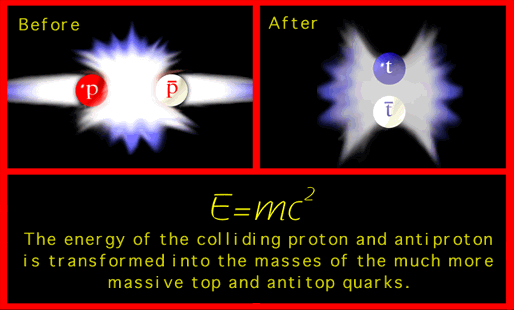
Mass-Energy Equivalence in Bhagavatgita

Krishna said in Gita...

Soul can neither be created or nor destroyed ..it just transfer from one body to another...that is from one form to another..one body to another...


Modern science says energy can neither be created or nor be destroyed it can only be changed from one form to another....

This shows that soul is nothing but energy...till it is there in our body we are alive...once it goes...we are nothing...so our Lord krishna knew it well before....Gita is nothing but science...science of life ..science of energy.....science of everything..

Gayatri is not for Women?

Why gals are advised not to chant gayatri mantra???

There is a controversy existing that women should not recite/chant 'Gayatri'. As a matter of fact neither do the Vedic Scripts nor the Sanatana Dharma discriminate women. On the contrary, womanhood is held in the Highest Esteem, and women are respected as Maa, (Mother) irrespective of their age and status. Yes, you can call any woman your mother! In ancient days, women were the leading managers and heading their homes while their counterparts were scouting for daily needs. But why then are they not allowed to take part in the rituals? Why were/are they not allowed to chant some of the Vedic versus?


It is widely known that some of the Vedic Versus vibrations are so powerful in nature. Once a woman starts chanting these versus regularly, she is likely to lose her female-hood character and get manly tendencies developed in physical appearance . In majority of cases, it might cause hormone disturbances in the body's physical mechanism and disturb their menstrual cycle. In rare cases, a woman who chants these slokhas and versus frequently, even develops masculine character which allows growth of hair in their face & mustache! Imagine, if every woman developed such growth!

It is a fact that to keep women in their natural glory and beauty, the ancient scholars did not allow them to chant or recite these versus. They knew precisely all the effects and side effects of what they did. However, they were allowed to do so once they cross their menopause stage, then the chances of disturbances in their body mechanism were minimal. Also the Gland functional in their body stops, at certain age - any further physical growth is minimal. Certainly it was not for any discrimination's but purely on the aforesaid reasons and points.

I hope that this clarification stands valid even in this scientifically developed age. Every ritual and practice of this Great Hindu religion has a valuable hidden meaning. Unfortunately these were not carried on to the next generation that caused some imbalances in the society. Had it been given in full meaning, we very well could have avoided fanatics & half learnt scholars who now dictate and discriminate women on so many counts.

Fine, now for the matter we need to compare it with human; hormone, the thyroid and other functional glands that produces certain liquid proposition, depending on every individual's body nature is, varying one for male & female. Why, even the Vocal Chord which produces the sound effect in our body too has different functional values for male & female. Apart from the above, the menstrual cycle, the more complicated one in nature, which causes some sort of discharge and with extended period of up to five days; In normal course, this cycle may be regular for every fittest woman. But when compounded with some anxiety, tension, fear and pressure, the period is disturbed with varying fluctuation. This is what the science elaborates. When the aquatic or sound vibrations causes some disturbances in the chemical proposition in mind and body, then the abnormality begins. But it is not just sudden and immediate certain. Where in, the vibrations causes gradual but determined effect in one's analogies of human anatomy!

The reason quoted for women not to recite or chant the versus with stronger power vibrations are thus affects the nerve system to weaken, then the gland functional causes more abnormalities and compounded with menstrual course disturbances. This might cause frequent health set back for a women, if she chants or recites some of the slokhas like Gayatri very often.So gals if you want to recite this mantra u can recite only 5 times a day with low pitch of voice because Gayatri mantra gives you a confident to face this world .But dont chant more than that.

Remember gals one thing, Gayatri maa is goddess and to ask for knowledge, strength and strong determination man has to chant this mantra that too they have to chant for goddess that is female , because we gals are already gifted with all above things except physical strength,which we can easily gain by yoga's and self confident.Gals your health is more important because you are the one who brings new life into this world,healthy women can only give healthy and prosperous future to country..

Word Gayatri, Absolute Devinity

Why is Gayatri represented as a female deity? 

Ans. Several people say that when masculine words have been used in Gayatri how can it be said Gayatri Mata? It should be understood that the Absolute Divinity it represents, is all pervasive and formless. It is beyond gender. In scriptures both masculine and feminine words are used for fire, air etc. The famous Sanskrit couplet which is a prayer to God says, ‘Oh God, you are mother, you are father (Twameva Mata-cha Pita Twameva).’ Literally, Savita may be called masculine, but its power, Savitri is feminine. These allegorical descriptions in the scriptures should be taken as such, and not used to score declamatory points.Shiva is called masculine but his power shakti is Feminine ...This is great respect give to womanhood in ancient india....


Oh women ..you are only shakti ...you are only savitri..you are only saraswati..you are only Lakshmi.

Related Posts Plugin for WordPress, Blogger...